It’s almost an article of faith in fund raising: Your prepare for a capital campaign or any major program by conducting a feasibility study (sometimes called a “planning study” or “market study”). In fact, these days even a major gift or planned giving program can lift off with a study.
It’s the traditional method of “test marketing” and “pre-selling” the program.
The study, according to the conventional wisdom, lets you to determine whether the proposed program can succeed, and to what extent.
Through the study, we’re told, an organization can identify candidates for the largest investments and the key volunteer leadership positions — and develop a strategy for bringing these people “into the fold.”
For much of my career, I was an enthusiastic advocate of the study. Years ago, I even wrote in The Raising of Money that a study was one of the 35 essentials of our work.
But I started to have second thoughts when I took over as counsel on a campaign. I hadn’t conducted the study myself and didn’t have access to the study director’s notes. As the campaign unfolded, it dawned on me that the study had been unnecessary, even counterproductive.
I began to wonder why so many organizations rush into the feasibility study. Now I understand that they were probably trying to make up for everything they hadn’t been doing up until then. (Of course, consultants’ near universal use of the study makes it hard to go another way.)
An organization that has been doing “the right stuff” all along may never need to conduct a feasibility study.
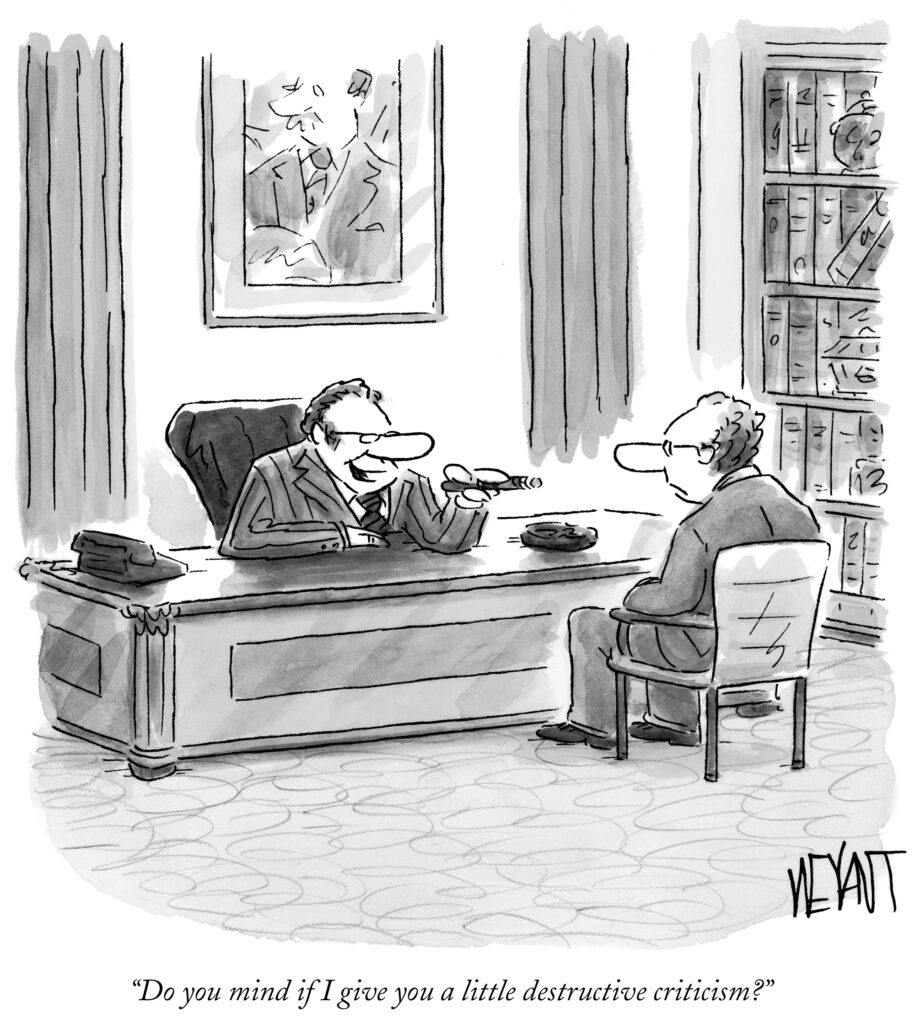
What’s more, a feasibility study may be the worst thing you can do. It can damage your relationships with donors, erode their trust, and limit your fund-raising potential.
What are you trying to accomplish?
There are plenty of good reasons to conduct a study — lots of benefits that can be cited. Many of these reasons are valid.
But the real question is whether a study is the best way to accomplish them, whether you’re getting ready for a campaign, major gifts, or planned giving program.
Could there be a better way to find out what you want to know — and a better way to create the climate for success?
Before I get into that, let’s look at the reasons people give for conducting the traditional study. In essence, you want to:
- Consult potential donors about the proposed program before going ahead (since the outcome will depend on their commitment).
- Find out what these people think of the organization, its staff and its programs.
- Test the effectiveness of the case for support.
- Determine whether the proposed dollar goal is attainable.
- Identify potential donors who can provide the largest investments.
- Identify candidates for campaign general chair and other key leadership positions.
- Develop a strategy to involve these potential donors and volunteers in the proposed program.
- Check on the proposed timing of the program.
- Identify any other issues that might affect the outcome.
- My friend Kent Dove was one of the first to add the internal readiness of the organization to this evaluation process.
These are all worthwhile objectives (although as we will see, number four can be very tricky). And more often than not, a properly conducted study can do most of these things.
Some consulting firms have refined the feasibility study to a high art. They’re well meaning, to be sure. But have they devoted themselves to getting better at something you might not really want to do?
I risk offending some good folks in being this straight with you. But I’m committed to telling it as I see it, and that means, I ask you: Why do it?
Because there’s another purpose to a feasibility study that most consultants won’t tell you. And there’s often a better way to go. Much better.
(Social innovation pushes ahead in many fields. Major donor fund raising, sadly, has seen little of it until now.)
You may be ready, but what about your donors?
For most organizations, getting ready for a study seems to be a pretty straightforward process.
You decide how much you “need” and for what purpose.
You put together your case to put the best face on your needs — to make them more sexy, as they say.
You make a list of the people you want to interview.
You get approval from the board, hire a consultant, and put the machinery in motion.
When these things have been done, an organization generally considers itself “ready” for the study.
But what about the donors — the people who are going to be asked all these questions? Since it’s their attitudes, opinions and choices that will determine the outcome of the study — or really the outcome of the program — shouldn’t we be asking ourselves whether they’re ready?
Many professionals will say, “That’s why you do a study in the first place … to take their temperature.” But if their “temperature” is cool, wouldn’t you be better off waiting until it’s warm before you ask all these big questions?
There are many things you can do to help that warming process along. And that’s what our jobs are all about — helping people “warm up” to our causes.
(Indeed, I’ve found great value in what used to be called “cultivation programs,” where potential benefactors are invited in earlier to hear the plans, and react to them before they are individually queried.)
But here’s the big point: If we’re so out of touch with people that we need a hire a consultant to find out what they think and feel about our organization, we may not be pleased with the answers we get.
The feasibility study doesn’t reveal what could be
Many folks seem to think that a study, especially when it’s conducted by a prestigious consulting firm, holds some magic that will cause philanthropic “angels” to materialize out of thin air. (And who doesn’t want to uncover new donors or even people of wealth who aren’t generally visible?)
But I’ll bet you already know which individuals in your community have the combination of the greatest wealth and influence, which makes them the leaders you want to consult with so that you can have a campaign or program that will succeed and inspire confidence.
And you already know a lot about where you stand with them, based on their relationship with your organization and their current level of investment.
What you don’t know is where you could stand with them–what the potential of the relationship might be.
What can you do to bring them closer to your organization? To raise their sights? (Or even better, what can you do to bring your organization closer to them?)
That’s what you really want to know: where you could stand with them. And you’re not likely to find it out through the standard feasibility study interview.
The study can increase cynicism and reduce trust
By now, sophisticated donors are accustomed to “walking through” the interview. This is not their first rodeo and they’ve become tired of these superficial exercises.
In a typical study, few of those interviewed have had anything to do with any of the planning that’s gotten you to this place. Few, in fact, have had any truly meaningful involvement with the organization.
But now that we want to raise a lot of money, we profess to be keenly interested in their opinions and advice. And we expect them to be ready to discuss seven-figure-plus investments and leadership roles.
Is it any wonder that many people passively resist? (Really, it’s remarkable that so many cooperate!)
What’s more, they know that the study interview is a wolf in sheep’s clothing. The pretense is that it’s all about seeking advice, when (as usually practiced) it’s really just a sales call in disguise.
Some are so put off by the artificiality of the study that they won’t even participate. For one thing, they know that whatever they say, you’ll probably go ahead with the program anyway. (“Feasibility,” my eye!)
Nothing in these artificial conversations builds trusting relationships with donors, the kind of relationships that lead to breakthrough philanthropic investments. In fact, trust is likely to be damaged — even when the study is done with standard levels of professionalism — because the fundamental relationship with the donor is off-kilter.
I say donors are right to resist being treated this way. The trouble is that they won’t tell you how they really feel about it. Maybe they figure you haven’t been entirely honest with them. Besides, civility calls for going through the motions.
Don’t get me wrong. I believe we must consult with donors before moving forward with a major development program — and keep on consulting with them.
And I believe in the value of “one-on-one” interviews. You will find no greater advocate or champion for interviews, consultations, and true engagement. But the traditional feasibility study may be the very worst approach to donor engagement.
The hidden danger of empty, premature questions
The typical study includes several high-potential donors who have little or no relationship with the organization. Some of these people have the capacity to make a “pace-setting” investment — one that raises the sights of all other donors.
(You might get a pleasant surprise: finding someone who loves you but who has never shown it. Blushing and excitedly you return to the office, “But I didn’t know!”)
What’s the best way to encourage a person to make that kind of commitment? To ask them point-blank how much they’re prepared to invest, and if they’re willing to take on a leadership role in the campaign?
“Well,” you say, “these are things we have to know.”
But why? “So we can enlist the chair and set the goal.”
But if we want to enlist one of our top choices as chair, we probably won’t “get” that person right away. And in my experience, it’s usually smarter not to set the goal until we have a better idea what some of the top commitments could be. So why push it?
The greatest danger arises when we press people in a study interview to give us a “tentative indication” of where they could fit in financially — what their financial commitment might be.
We professionals know, of course, that naming a figure is an important psychological step for the donor. But the donor knows that, too. That’s one big reason that so many decline to answer the question — and others give a cautious and conservative response.
They resist being pressured to make a premature pseudo-commitment. (That pressure is always lurking beneath the surface, as much as consultants would like to assure you it’s not.)
When you push a reluctant donor to name a figure, they’re likely to talk about a token investment. Once that figure has been named, it can be difficult to get the donor to think bigger.
And that’s how the study can limit your potential.
For when a donor who’s capable of investing $10,000,000 talks about a $100,000 commitment, you may have a very difficult time increasing that figure. (You may get exactly what you asked for, rather than what the donor is capable of and really would love to do.)
It gets worse when you try to extrapolate from the donor’s commitment to the question of what your proposed dollar goal will be.
Conventional wisdom says (and I agree) that people make their own commitments in light of the total and what others are doing.
For example, if you propose a goal of $100 million and present a typical “table of standards,” it’s most unlikely that anyone will consider a commitment of more than $20 million — even someone who has the capacity and desire to invest several times that amount. (Add zeros, even make it a goal in the billions, and the same principles operate.)
Experienced study directors, of course, preface these questions with others that are easier to answer. And they approach the subject of money with the greatest of tact, talking about other potential donors and the “table of investments” required for a successful campaign.
My point is simply that even the most skillful interviewer can’t compensate for the lack of a relationship between the donor and the organization, and the lack on the part of the donor of feeling understood as a person.
This is what I mean when I say that a feasibility study can actually limit your potential.
So what do you do instead, sit on your hands? Hardly.
The alternative: Build authentic relationships
When all is said and done, what we’re searching for in a feasibility study is leadership — champions who want to lead.
With outstanding volunteer leadership … and the exemplary financial commitments it brings forth … we know that all obstacles can be overcome, and that success is virtually guaranteed.
Without it? Likely failure. At least failure to capitalize on the potential.
So the question becomes: What is it that inspires people to assert that kind of leadership?
Based on my experience, it begins with an authentic relationship with the organization and people associated with it. Or it can begin with a deep commitment to the cause the organization represents.
The relationship with the organization and its people often grows into a commitment to the cause. Sometimes it works the other way around, and the conviction about the cause grows into the relationship with the organization’s people.
Let me stay with this idea. What do I mean by “authentic” relationships? Simply, those in which donors know that they’re valued, trusted, and respected as human beings — not just bank accounts.
Money is only a symbol of what donors truly bring to the voluntary sector: their compassion, their dedication, their highest values and aspirations. We offer donors, through our organizations and the vehicle of philanthropy. an opportunity to transfer those values and realize those aspirations.
Significant philanthropic investments can appear to be about prestige or ego gratification. Even then, they are more powerful when the meaning embedded in them becomes explicit.
When people believe that an organization can help to bring about the kind of future they want for their children, their community, and their world, they’ll do extraordinary things to advance that cause.
It all starts with an authentic, trusted relationship.
We build those authentic relationships by encouraging donors to talk about the things that are most important to them. By making it legitimate to convene a conversation of consequence. By really listening to donors when they’re talking to us. By providing people with meaningful engagement, even ownership, in the life of the organization.
Development professionals often talk about the need to “cultivate” donors. What they can mean by that is romancing donors, softening them up, setting them up for the “ask.” We may think we’re being subtle and clever. But these days, most donors readily see through such machinations.
They’ve become jaded with this exercise (especially when conducted by a firm).
What I’m recommending goes deeper and lasts longer. I’m talking about building lifetime relationships. Putting donors at the center of our universe, making them our true partners and collaborators. Or better said, making us their partners on their journey.
When we operate on this level, there’s no need for pressuring, manipulating, and “romancing” people. The process leads naturally to exemplary financial commitments. It can’t be helped.
Focus on meaning and the money will come.
If you want to distinguish your organization in the minds of donors, forget about the cleverness and curb the cynicism. Build genuine relationships. Foster the kind of relationships that are borne of a common interest in the collective good. Listen, learn and connect — at the deepest possible level.
Let me be crystal clear, I’m not talking about merely relating effectively one person to another, trying to turn a money conversation into a social one.
As one consultant puts it, “Try to find something you have in common with the prospect. And then something else. And something else.”
Well, being sociable, civil and attentive are all worthy attributes. But consider what happens when we go beyond the comfortable social conventions, when we talk about and then work to bring an idea to life that matters to the donor, to you, and to the organization. An idea that serves the greater good in the largest way possible.
This gives the visit with the donor an “intentionality,” as Kent Schell described it when I was working with him at the University of Michigan as it prepared for a $3 billion campaign.
You can make this a conscious and systematic program. The theory and the methodology are available. (Much of this is based on new thinking from the field of organization development.)
And if you think it takes the commonly-held duration of three years to achieve big results, think again. I’ve seen consultants manage this in a few weeks, as the magic of the “teachable moment” occurs. Not usual, but possible.
If you know how to use this new approach, you may never need to conduct a feasibility study.
The study, after all, is merely a “tool of deficiency.” It’s what you do when you haven’t developed the kind of relationships I’ve been talking about. When you do have those relationships, there’s no need to call the “dating service” to consult with you.
So why isn’t everybody doing this?
I’m not trying to say that the feasibility study is a useless exercise. It’s still a good way to initiate (or resume) a dialogue with your donors, and to get the “lay of the land” before embarking on an ambitious development program. Most consulting firms can provide competent technicians who have conducted any number of studies. I used to be one of those technicians. (In fact, I did my first study when I was 23, and dozens after that.)
Most firms can also readily recognize a situation where conducting a feasibility study may not be the best option. Some may even suggest that the organization implement a “cultivation” program before conducting a study.
In most cases, however, the organization is determined to move forward with a study as quickly as possible. “Cultivation,” we’re told by impatient upper management, takes too long and costs too much. After all, fund raising boils down to asking for the money, and quick results are top priority.
As consulting firms know, most clients will go along with a “cultivation” program only when the donors themselves–through the study–tell them it’s essential. That happens all the time. In the end, organizations that try to avoid implementing a “cultivation” program by opting for the traditional study generally end up having to do the “cultivation” anyway.
Furthermore, most firms are geared to selling feasibility studies. They see the study as the easiest way to “get a foot in the door” with the client, and many are willing to provide the service at a reduced fee.
When a firm is engaged to conduct a study, of course, it’s also generally retained after the study to provide resident management or periodic consulting services. And unless the study results are truly horrendous, most firms will recommend going forward with a campaign once x and y and z are addressed — steps that the organization often doesn’t take.
But more crucial is the fact that because the firm wants a long-term contract, their view can be biased. Even though they want a contract that leads to success, they still have a financial stake in the outcome of the study. They don’t want to disappoint, and so give you the steps to take to prepare. (I’m grateful when I meet the consultant who is an exception.)
One more point about selecting counsel: It’s wise to keep in mind that study interviews are confidential, and that this information becomes the property of the firm. That makes it difficult for the organization to “change horses” after the study, even if it’s unhappy with the firm.
(Occasionally, a consultant or a development officer dispenses with confidentiality, except when a specific staff member is being discussed in an interview. At least one consultant, Kent Dove, has found that interviewees seem to be just as forthcoming.)
Why not reach higher than conventional studies allow?
Why wait for donors to tell you, in their feasibility study interviews, that they aren’t ready for a campaign?
What if you began — well before bringing up the subject of money — to use the same meetings with donors to build a closer and more authentic relationship with, based on mutual respect and trust … and based on the person’s built-in desire, the deep human longing, to make a real difference?
What if you cared enough to listen and learn about the donor’s most cherished values and aspirations?
What if you asked the donor to talk about the kind of world they wanted to see — a future that your organization might help to make real?
Why not begin building the relationships of mutuality that lead naturally to pacesetting philanthropy?
This can be an exciting process — for the organization and for its donors. It doesn’t have to be time-consuming or expensive. And in the end, believe me, you’ll come out way ahead!